19+ Years Industry Experience
 Dedicated customer & tech support
 Easy 3 step booking process

 19+ Years Industry Experience
Dedicated customer & tech support
Easy 3 step booking process
19+ Years Industry Experience
Dedicated customer & tech support
Easy 3 step booking process


 Specialising in EICR surveys and related property services.
Over 19 years experience providing property surveys for all building types.
Contact us for free quotes and impartial advice.
Specialising in EICR surveys and related property services.
Over 19 years experience providing property surveys for all building types.
Contact us for free quotes and impartial advice.


Social housing providers — local authority councils, housing associations, and ALMOs — have significant electrical safety responsibilities across their stock. The Electrical Safety Standards in the Private Rented Sector (England) Regulations 2020 technically applied only to private rentals, but the 2025 Amendment Regulations extend mandatory EICR requirements to social landlords for the first time.
Key dates:
With tens of thousands of properties to manage per provider, ensuring every home has a valid EICR and that remedial work is tracked to completion presents unique operational challenges. This guide covers the legal framework, inspection frequencies, access management, remedial processes, and regulatory expectations.
Managing a housing portfolio? Get a portfolio EICR quote — corporate accounts available with volume pricing.

The regulatory landscape for social housing electrical safety is more complex than for private rentals — multiple overlapping obligations from different legislative sources.
Homes (Fitness for Human Habitation) Act 2018 — applies to all tenancies including social housing. Requires properties to be fit for human habitation throughout the tenancy. Electrical safety is explicitly covered. Tenants can take direct legal action if the property is not fit.
The Decent Homes Standard — cornerstone of social housing quality since 2006. Properties must be free from Category 1 hazards under HHSRS, which includes electrical hazards. A property with an unsatisfactory EICR or unresolved C1/C2 codes would likely constitute a Category 1 hazard.
Social Housing (Regulation) Act 2023 — strengthened the Regulator’s powers. Proactive inspections, unlimited fines, more direct intervention when providers fail to maintain safe homes. Passed in the wake of Grenfell and subsequent social housing safety concerns.
Awaab’s Law — following the death of Awaab Ishak from prolonged mould exposure. Primarily focused on damp and mould, but the principle — social landlords must investigate and resolve hazards within set timescales — is expected to extend to electrical faults.
Plus the Health and Safety at Work etc. Act 1974 (communal areas and employees), the Landlord and Tenant Act 1985 (repairing obligations), and BS 7671 (the Wiring Regulations). Taken together, social landlords have no reasonable basis for not maintaining a comprehensive EICR programme across their stock.

No single regulation has mandated a specific inspection cycle for social housing historically, but most providers adopted a 5-year cycle voluntarily to align with private sector standards and BS 7671 recommendations. Some use a risk-based approach.
| Property type | Typical frequency | Notes |
|---|---|---|
| General needs housing | Every 5 years | Aligns with private sector and BS 7671 |
| Sheltered / supported housing | Every 5 years (some 3 years) | Vulnerable tenants may justify shorter intervals |
| Communal areas | Every 5 years | Hallways, stairwells, plant rooms, shared facilities |
| Void properties | At every void | EICR during void works before re-let, regardless of last test date |
Some larger associations adopt a 10-year cycle for newer stock (properties <15–20 years old with clean history), applying a stricter 5-year or 3-year cycle to older stock with known concerns. Acceptable provided the approach is documented, justified, and reviewed.
Void properties are an important opportunity. When a tenant moves out, the property is empty and fully accessible — the ideal time to carry out an EICR regardless of when the last one was done. Most social landlords now include EICR inspection as a standard part of the void works process.
Whatever frequency is adopted, the policy must be formally documented, approved at board level, and consistently applied. The Regulator expects providers to demonstrate and justify their inspection intervals with evidence.

Scale is the defining challenge. A typical housing association manages 5,000 to 50,000 properties — each requiring regular EICRs and follow-up remedial work. Managing at scale requires structured systematic processes:
Data management is the backbone. Many social landlords use dedicated asset management or compliance software that integrates EICR data with gas safety, fire risk assessments, and asbestos surveys — enabling portfolio-level reporting and ensuring nothing falls through gaps.
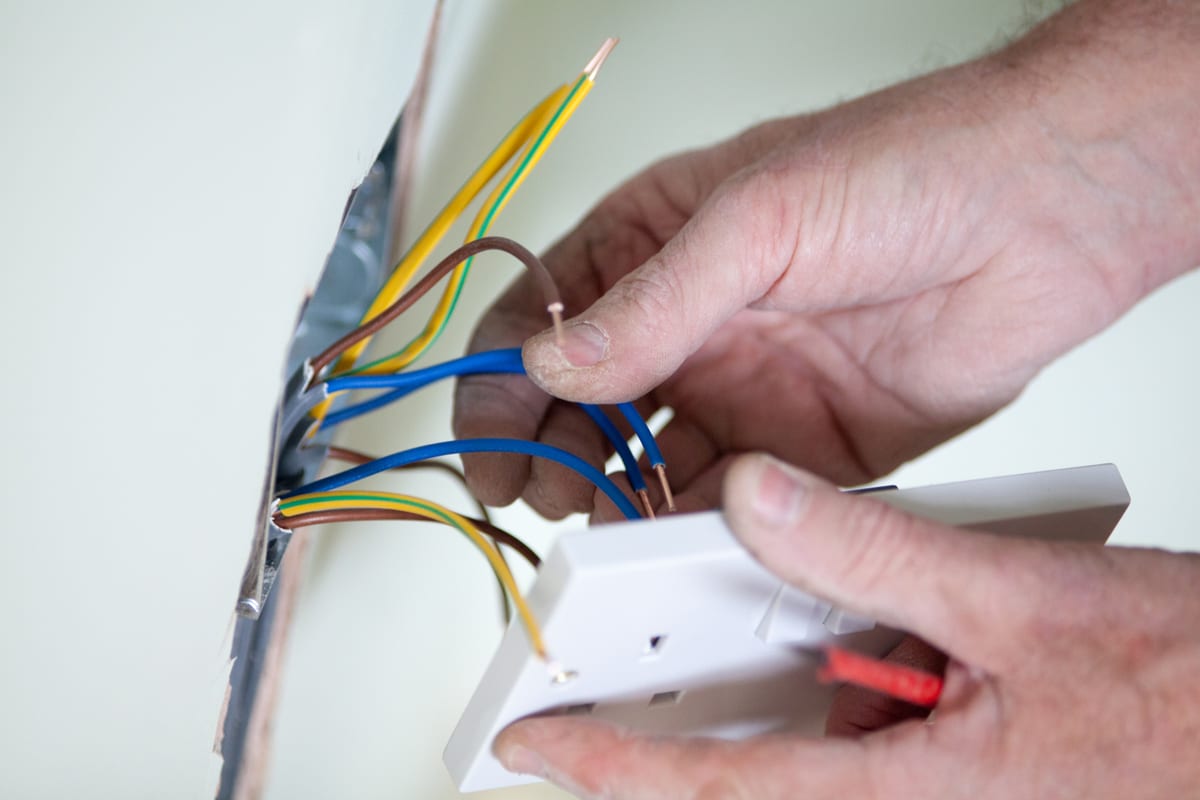
Gaining access to occupied properties is the single biggest challenge. A significant minority of tenants refuse access, miss appointments, or cannot be reached. Every property without a current EICR is a potential hazard — landlords have a duty of care and must take all reasonable steps.
Follow a documented pre-action protocol:
Document every access attempt. Letters, calls, texts, door-knocks, tenant responses. Essential for legal action and for demonstrating reasonable steps to the Regulator. Target access rate of 98–100%; report no-access figures to the board as a KPI.
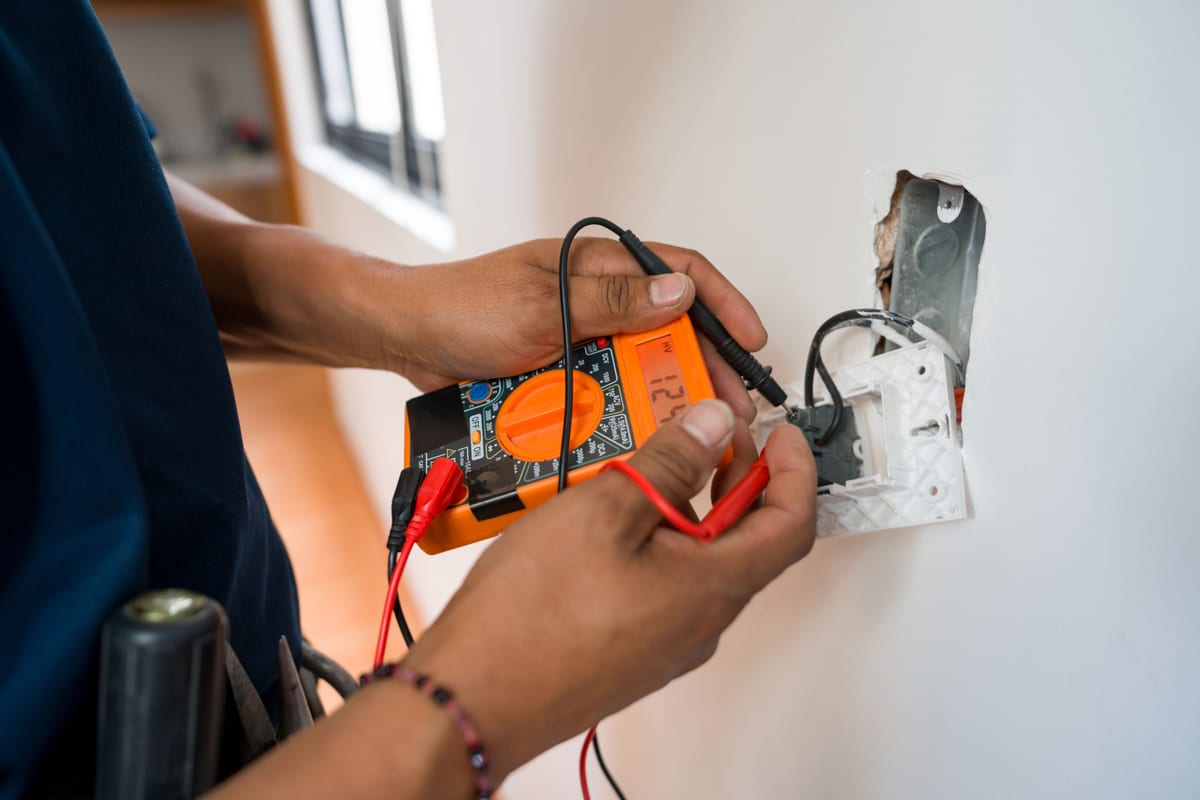
Response timescales by fault classification:
Portfolio KPIs to track: EICR compliance rate (target 100%); C1 response time (target 100% within 24h); C2 completion rate (target 100% within 28d); no-access rate (target <2%); overdue remedials (target 0); void EICR completion (target 100%). Report monthly or quarterly to the board.
Contractor management: qualified electricians with City & Guilds 2391 and current 18th Edition (BS 7671). Register with NICEIC, NAPIT, or ELECSA. Verify at procurement and periodically. Implement quality assurance — spot-check 5–10% of completed EICRs. Action poor quality immediately: training, supervision, or removal from the approved list.
Regulator of Social Housing expectations: under updated Consumer Standards, the Safety and Quality Standard requires all statutory requirements for tenant safety to be met. Providers unable to demonstrate current EICRs or with significant outstanding remedial work face regulatory scrutiny.
Serious detriment threshold — widespread non-compliance (no current EICRs, unresolved C1/C2 faults, systemic failures) almost certainly meets this threshold. Intervention ranges from formal notices and action plans through to manager appointment or stock transfer.
Building Safety Regulator — for high-rise stock (18m+ or 7 storeys+), the Building Safety Act 2022 requires a safety case covering electrical safety. The EICR programme feeds directly into the safety case.
The Grenfell legacy — board members and executives are personally accountable for safe homes. Electrical safety via a robust EICR programme is a non-negotiable part of that accountability. For commercial properties in your portfolio see our commercial EICR guide.
See what landlords, homeowners and businesses say about working with Easy EPC.


The original 2020 Regulations applied only to private landlords. The 2025 Amendment Regulations extend equivalent requirements to social landlords from November 2025 for new tenancies and November 2026 for all pre-existing tenancies. Social landlords already had overlapping duties under the Homes (Fitness for Human Habitation) Act 2018, the Decent Homes Standard, and the Consumer Standards set by the Regulator.
Most social landlords adopt a 5-year cycle, consistent with private sector requirements and BS 7671 recommendations. Some use a risk-based approach with shorter intervals (3 years) for older or higher-risk stock such as sheltered housing. Void properties should have an EICR as part of void works before re-letting, regardless of when the last inspection was.
Follow a pre-action protocol: multiple appointment offers including evening/weekend slots, letters explaining the importance, home visits and door knocking, and as a last resort legal action such as an injunction. Document all attempts thoroughly — evidence is essential for legal proceedings and for demonstrating reasonable steps to the Regulator.
The landlord (council or housing association) pays for the EICR and any necessary remedial work to the fixed electrical installation. Tenants are not charged. The cost is funded from the maintenance budget and factored into long-term asset management planning.
Remedial work per fault urgency: C1 (danger present) made safe within 24 hours; C2 resolved within 28 days; C3 addressed through planned maintenance. The Regulator can take action against providers failing to maintain safe homes — formal notices, unlimited fines, manager appointment, or stock transfer.
Yes — standard no-access protocol includes multiple attempted visits with written notifications at each stage, and a final exception report documenting all attempts that can be used to support landlord escalation.
Book an EICR in your city — from £99.95+VAT
Get a no-obligation quote for your domestic or commercial EICR. Our team will respond during opening hours.