19+ Years Industry Experience
 Dedicated customer & tech support
 Easy 3 step booking process

 19+ Years Industry Experience
Dedicated customer & tech support
Easy 3 step booking process
19+ Years Industry Experience
Dedicated customer & tech support
Easy 3 step booking process


 Specialising in EICR surveys and related property services.
Over 19 years experience providing property surveys for all building types.
Contact us for free quotes and impartial advice.
Specialising in EICR surveys and related property services.
Over 19 years experience providing property surveys for all building types.
Contact us for free quotes and impartial advice.



Yes — unequivocally. Since 1 June 2020 (new tenancies) and 1 April 2021 (existing tenancies), all private landlords in England must ensure their rental properties have been inspected and tested by a qualified person, with a valid EICR certificate in place. Not optional, not merely a recommendation — a legal obligation with significant financial penalties for non-compliance.
The requirement extends to all types of private rental: single lets, HMOs, flats, houses, shared accommodation. Single buy-to-let or portfolio of hundreds — the law applies equally. Since November 2025, social landlords have also been brought into scope, meaning the vast majority of rented homes in England now require a valid EICR.
The core legislation is the Electrical Safety Standards in the Private Rented Sector (England) Regulations 2020. Inspections must be carried out by a qualified and competent person at least every 5 years.
New build / full rewire exemption: if a property has been newly built or completely rewired and holds a valid Electrical Installation Certificate (EIC), no EICR is required for 5 years from the EIC date. Partial rewires do not qualify.
Not sure about your obligations? Use our EICR Compliance Checker.

Your obligations as a private landlord in England:
Who is “qualified and competent”? While registration is not strictly compulsory, it provides essential assurance. Look for electricians registered with NICEIC, NAPIT, ELECSA, or another recognised scheme. Local authorities and insurers are far more likely to accept EICRs from registered professionals.

The Electrical Safety Standards (Amendment) Regulations 2025 — enabled by the Social Housing (Regulation) Act 2023 — extend mandatory EICR requirements to social landlords for the first time. One of the most significant changes to electrical safety law in recent years.
Timeline for compliance:
Requirements mirror the private sector: inspections every 5 years, EICR to tenants within 28 days, remedial work completed within 28 days. Social landlords must also carry out PAT testing on any electrical appliances provided as part of the tenancy.
Scale: approximately 4.2 million socially rented homes in England brought into scope. Affected organisations: housing associations, local authority housing, registered providers, university accommodation, build-to-rent portfolios.
Driven in part by the Grenfell Tower fire (which originated from an electrical fault) and the death of Awaab Ishak. Local authorities gain new enforcement powers mirroring their existing powers in the private sector. See our social housing EICR guide for detailed compliance timelines.

England — mandatory since 1 June 2020 (new tenancies) and 1 April 2021 (existing tenancies) under the Electrical Safety Standards in the Private Rented Sector (England) Regulations 2020. Inspections every 5 years. Financial penalties up to £30,000 per breach. Extended to social housing from November 2025.
Scotland — introduced ahead of England under the Housing (Scotland) Act 2014. In force from December 2015 for new tenancies, December 2016 for existing. Inspections every 5 years. Scottish obligation is two-part:
Any C1 or C2 codes must be rectified to comply with the repairing standard. As with England, a valid EIC on a newly built or fully rewired property is accepted in lieu of an EICR for 5 years.
Wales — currently no specific standalone EICR legislation for standard private rentals. However, landlords of HMOs in Wales are required to have an EICR every 5 years as a condition of their HMO licence. The Renting Homes (Wales) Act 2016 requires properties be fit for human habitation (which includes electrical safety) but does not explicitly mandate an EICR.
Best practice: Welsh landlords should treat their rental properties the same as English ones and obtain an EICR every 5 years. Given the direction of UK legislation, Wales is likely to introduce specific requirements in the coming years.
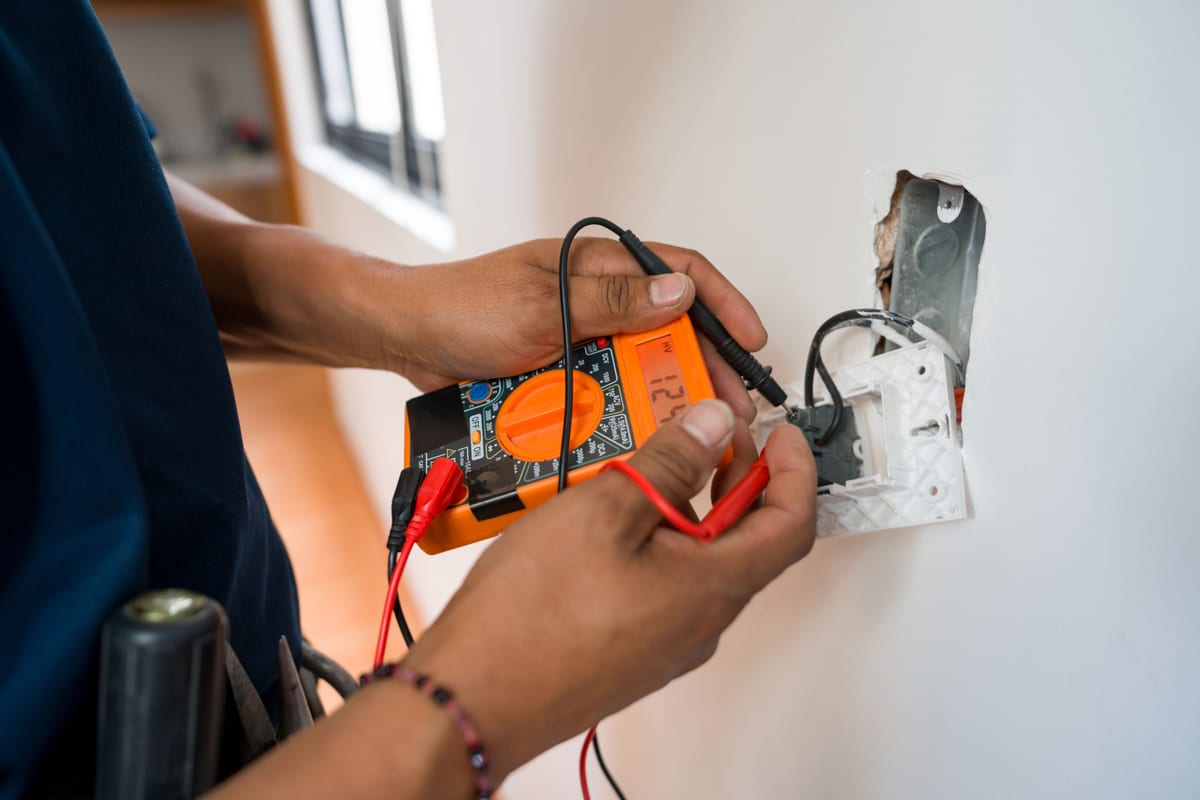
The consequences of failing to comply are serious and wide-ranging:
Local authorities are increasingly active in enforcement. The extension to social housing has significantly expanded enforcement capacity across the sector.
Don’t risk a £30,000 fine. Get your landlord EICR quote — prices from £99.95+VAT.
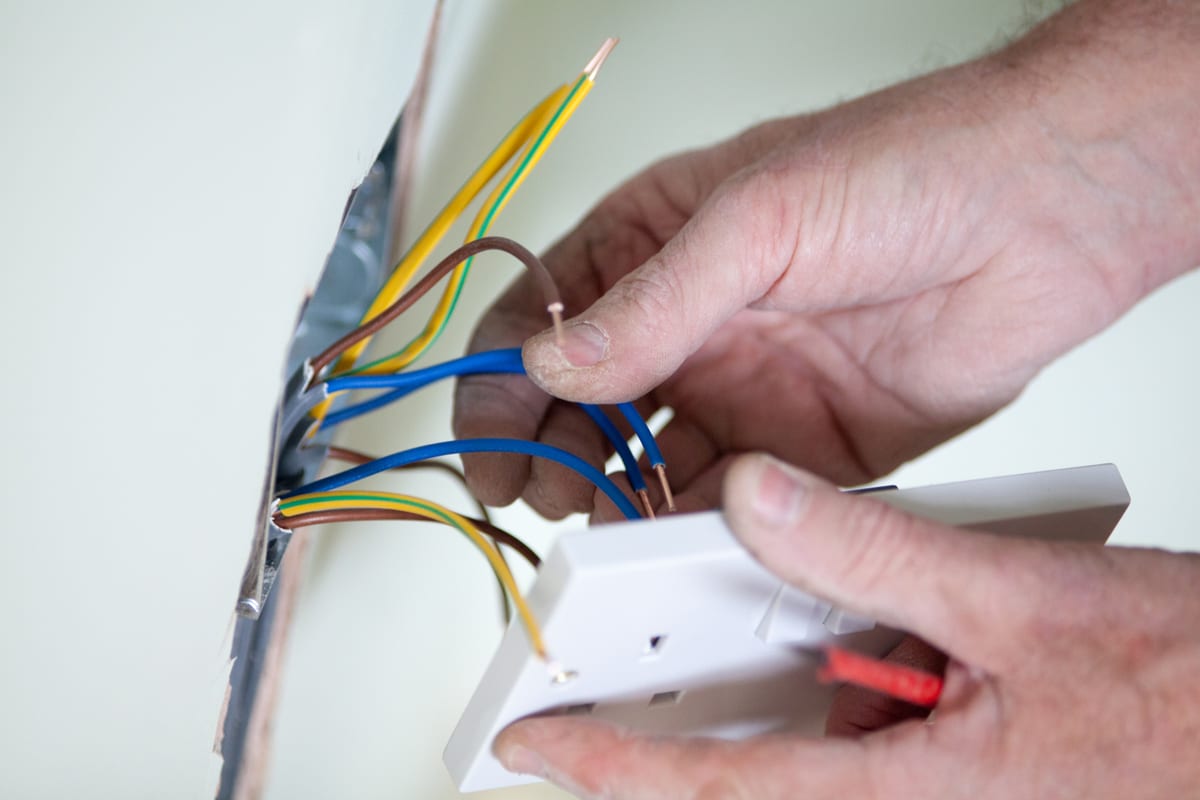
Checklist:
How often: at least every 5 years (maximum interval). Shorter if the inspector specifies. Check validity at the start of every new tenancy — if the current EICR is less than 5 years old and Satisfactory, no new inspection is needed; just provide a copy. After remedial work on a failed EICR, a re-inspection or MEIWC confirms completion. See our validity guide.
What happens if a rental fails an EICR: Unsatisfactory means C1, C2, or FI codes recorded. Arrange remedial work within 28 days. Easy EPC can carry out EICR remedial work — on the day of inspection, our engineer will automatically carry out minor remedial work up to £200+VAT where time and parts allow. After remedial work, you receive either a new satisfactory EICR or a Minor Electrical Installation Works Certificate (MEIWC). Written confirmation to tenant and local authority within 28 days. C3 codes (Improvement Recommended) do NOT cause a fail. See our EICR fail guide.
Cost: from £99.95+VAT for a small property. Typical 3-bed house from £150+VAT. Corporate accounts with portfolio pricing and monthly billing available for landlords managing multiple properties. Full pricing in our EICR cost guide. Need commercial instead? See our commercial EICR guide.
See what landlords, homeowners and businesses say about working with Easy EPC.


Yes. Every individual rental property requires its own valid EICR. If you own a portfolio, each property must be inspected and tested separately. The EICR is specific to the installation at a particular address and cannot be shared or transferred between properties.
Yes, as long as the EICR is still valid (less than 5 years old and no shorter period specified by the inspector). Supply a copy to the new tenant before they move in. No requirement to obtain a new EICR solely because the tenancy has changed.
If the property has been fully rewired and has a valid Electrical Installation Certificate (EIC), you do not need an EICR for 5 years from the EIC date. Partial rewires do not qualify for this exemption — you would still need an EICR covering the entire installation.
You must demonstrate that you have taken all reasonable steps to arrange the inspection. Document all attempts in writing — letters, emails, text messages. The government guidance acknowledges access difficulties and advises landlords to keep thorough records. Documented genuine efforts usually avoid enforcement action for the delay.
No. The EICR requirement applies to all private rental properties in England regardless of furnishings. The EICR covers fixed electrical installations only — not portable appliances. If you provide appliances with a furnished let, PAT testing is recommended as best practice, but is not a legal requirement in England (though it is in Scotland).
Every 5 years, or sooner if the report specifies a shorter interval.
A qualified electrician registered with NICEIC, NAPIT, or equivalent competent-person scheme.
Book an EICR in your city — from £99.95+VAT
Get a no-obligation quote for your domestic or commercial EICR. Our team will respond during opening hours.