19+ Years Industry Experience
 Dedicated customer & tech support
 Easy 3 step booking process

 19+ Years Industry Experience
Dedicated customer & tech support
Easy 3 step booking process
19+ Years Industry Experience
Dedicated customer & tech support
Easy 3 step booking process


 Specialising in EICR surveys and related property services.
Over 19 years experience providing property surveys for all building types.
Contact us for free quotes and impartial advice.
Specialising in EICR surveys and related property services.
Over 19 years experience providing property surveys for all building types.
Contact us for free quotes and impartial advice.



Houses in Multiple Occupation face a level of regulatory scrutiny that goes well beyond standard rental properties — and electrical safety is no exception. HMOs carry higher occupancy, shared facilities, and greater fire risk, which is why local authorities and the government apply stricter rules.
A property is classified as an HMO if it is occupied by three or more people forming two or more separate households who share basic amenities such as a kitchen, bathroom, or toilet. This includes shared houses, bedsits, and some converted flats that do not meet the 1991 Building Regulations standard.
Mandatory licensing applies to larger HMOs — properties occupied by five or more people from two or more households. These require a licence from the local authority regardless of location. Many councils also operate additional licensing schemes extending the requirement to smaller HMOs with three or more occupants.
Definitions vary between England, Scotland, and Wales. In Scotland, any property let to three or more unrelated tenants requires an HMO licence. If unsure, check with your local authority — getting it wrong can result in unlimited fines and rent repayment orders.

England — Under the 2020 Regulations, all private rented properties including HMOs must have an EICR every 5 years. The report must be provided to tenants within 28 days and to the local authority within seven days if requested. HMOs do not have separate EICR regulations, but most councils require a valid EICR as part of the licence application and renewal.
Wales — Wales does not have a standalone equivalent of the 2020 Regulations for standard private rentals, but HMOs specifically require an EICR every 5 years as a condition of HMO licensing under the Housing (Wales) Act 2014. HMO landlords in Wales already face a legal obligation that standard Welsh landlords do not.
Scotland — Scotland has required EICRs for all private rented properties since 2015 under the Repairing Standard. The 5-year cycle applies to HMOs just as to standard lets. Scottish HMO licensing also typically requires PAT testing of landlord-supplied appliances. Many councils impose additional conditions around fire detection circuits and emergency lighting in HMOs.
Across all jurisdictions, most councils will not grant or renew an HMO licence without a valid EICR. Even where not explicitly mandated by national legislation, it is almost always a licence condition set by the council.
For non-residential properties, see our commercial EICR guide.
Higher occupancy, shared facilities, and older converted properties combine to make electrical safety significantly more important — and more likely to reveal issues — than in standard rental properties. Electrical faults are a leading cause of fires in HMOs.
Higher occupancy means higher electrical load. More tenants means more appliances, simultaneous usage, and strain on circuits designed for a single household. Circuits in HMOs commonly operate at or near capacity, especially in older properties.
Shared facilities drive constant circuit usage. Communal kitchens, bathrooms, and laundry areas see far heavier use than their equivalents in a single-family home. Appliances in shared kitchens may run almost continuously during peak hours.
Tenants may use high-draw appliances in bedrooms. Electric heaters, cooking appliances, and multiple devices on extension leads in individual letting rooms can overload circuits designed for lighting and a few sockets.
Multiple consumer units are common. Many HMOs — especially converted properties — have more than one consumer unit serving different parts of the building. This adds complexity and increases the likelihood of finding inconsistencies or faults.
Older converted properties may have DIY or non-compliant work. Properties converted from single dwellings often have electrical work carried out by previous owners or unqualified individuals. Breached fire barriers, incorrect cable routing, and missing RCD protection are common findings.
Local authorities are well aware of these risks and actively inspect and enforce electrical safety standards in HMOs. Non-compliance can result in prosecution, civil penalties, and revocation of the HMO licence.

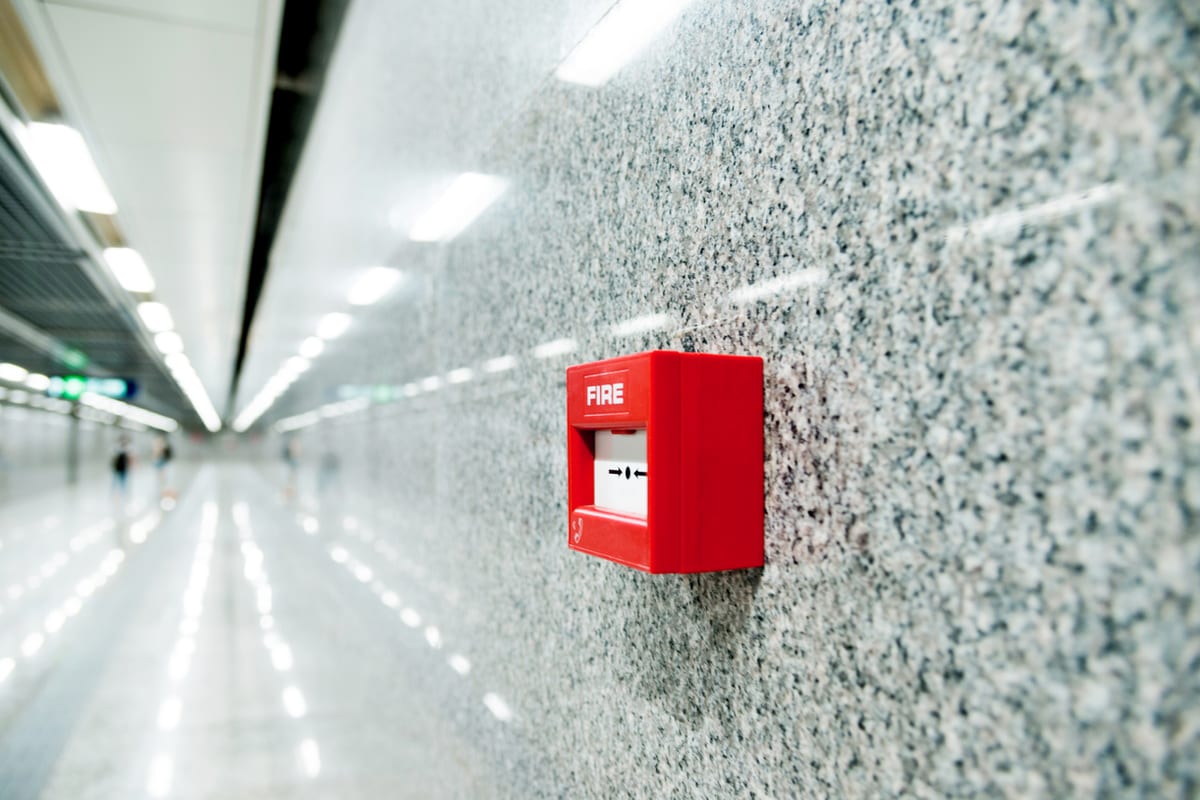
HMOs require interlinked fire detection systems covering the whole property to BS 5839. Many councils also require emergency lighting to BS 5266 on escape routes and in communal areas.
These are separate certifications from the EICR, but the EICR covers the electrical supply feeding the fire alarm and emergency lighting systems — continuity, circuit integrity, and isolation arrangements. Faults in the supply can compromise the life-safety systems above.
Common findings on the fire alarm and emergency-lighting supply circuits include:
Where we identify issues, we coordinate with a BS 5839 / BS 5266 specialist to arrange any system-level remedial work alongside the EICR remediation. Full BS 5839 fire alarm testing and BS 5266 emergency lighting testing are separate services, but the EICR confirms that the supply to them is sound.
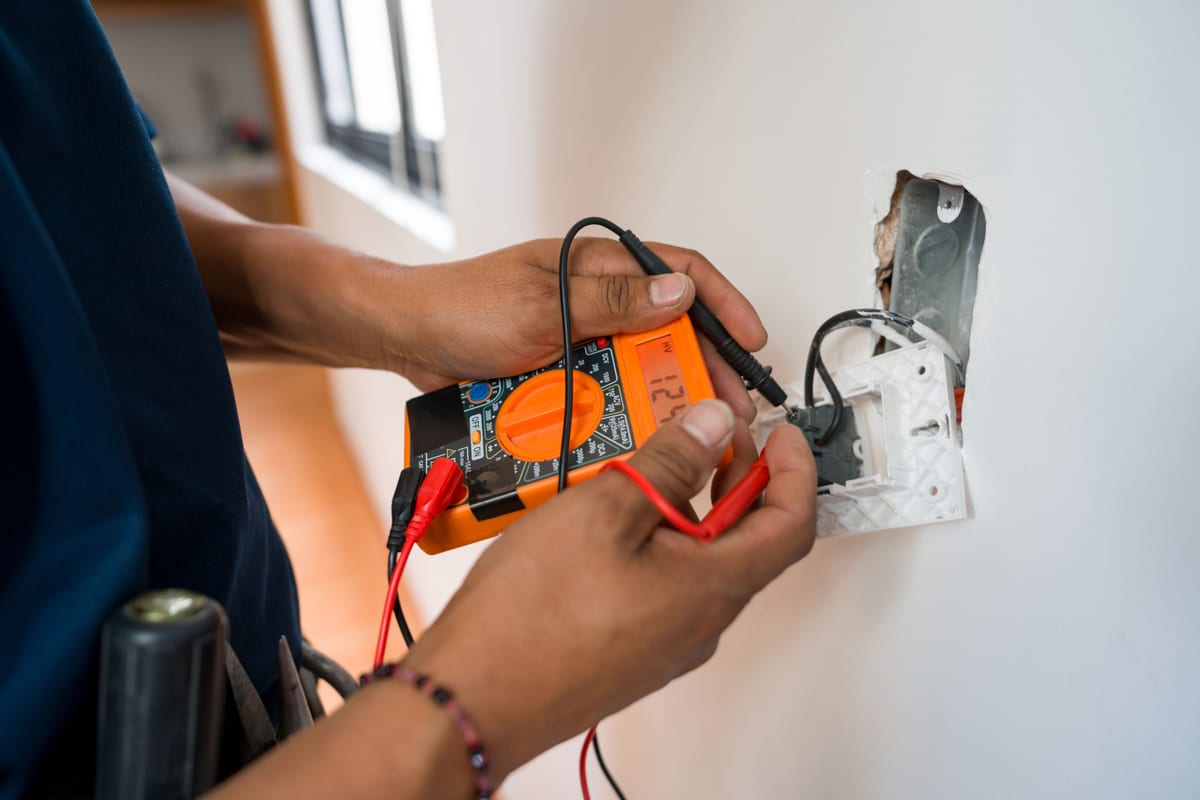
An HMO EICR is typically more expensive than a standard residential inspection. Standard domestic EICR might cost £150–£250; HMO EICR typically £250 to £500+ depending on size and complexity.
Higher cost reflects additional work: multiple consumer units, more circuits to test, larger installations with more outlets and lighting points, and more rooms requiring individual inspection. Three-phase supplies, sub-mains between floors, or complex fire alarm circuits push costs higher. Bedrooms and overall layout are the main cost drivers. See our EICR cost guide. EICR cost is separate from remedial work.
Common HMO EICR failures:
If your EICR is Unsatisfactory, you have 28 days (or less if specified) to complete remedial work. See our EICR codes explained guide. HMO landlord? Get an HMO EICR quote — we handle multi-unit properties with multiple consumer units.
See what landlords, homeowners and businesses say about working with Easy EPC.


Yes. In England, all private rental properties need an EICR every 5 years including HMOs. In Wales, HMOs specifically require one as a licensing condition. In Scotland, the same 5-year rule applies. Most local authorities require a valid EICR as part of the HMO licence application and renewal.
In most cases, yes. Most local authorities require a valid EICR as part of the HMO licence application and renewal. Specific conditions vary by council, but it is unusual for a licensing authority not to require proof of electrical safety. Check your local authority’s specific conditions.
No. One EICR covers the entire property’s fixed electrical installation, including individual letting rooms and shared areas. However, each consumer unit and its associated circuits will be individually tested. If the property has multiple consumer units, they are all included in the same inspection.
Every 5 years under the 2020 Regulations (England), the Housing (Wales) Act 2014 (Wales HMO licensing), or the Repairing Standard (Scotland). The inspecting electrician may recommend a shorter interval based on the condition of the installation.
The EICR confirms the electrical supply to the fire alarm is sound. Full BS 5839 fire alarm testing is a separate specialist service — we can coordinate both if needed.
We coordinate with you and give tenants 24 hours’ notice. A typical HMO inspection takes half a day to a full day depending on size and number of consumer units.
Yes — a Satisfactory EICR from a NICEIC- or NAPIT-registered contractor is accepted by all English councils for HMO licensing.
Book an EICR in your city — from £99.95+VAT
Get a no-obligation quote for your domestic or commercial EICR. Our team will respond during opening hours.