19+ Years Industry Experience
 Dedicated customer & tech support
 Easy 3 step booking process

 19+ Years Industry Experience
Dedicated customer & tech support
Easy 3 step booking process
19+ Years Industry Experience
Dedicated customer & tech support
Easy 3 step booking process


 Specialising in EICR surveys and related property services.
Over 19 years experience providing property surveys for all building types.
Contact us for free quotes and impartial advice.
Specialising in EICR surveys and related property services.
Over 19 years experience providing property surveys for all building types.
Contact us for free quotes and impartial advice.


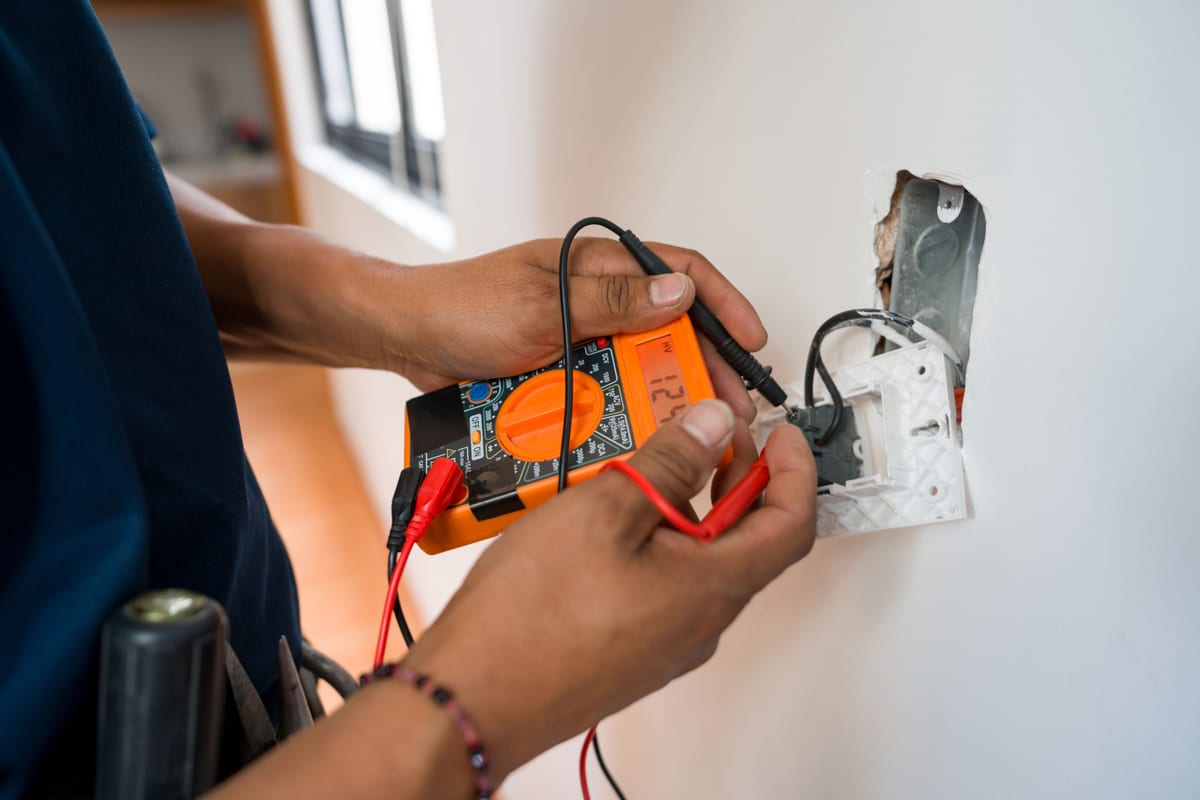
An EICR does not technically have a “pass” or “fail” outcome in the way that an MOT does. Instead, the report classifies the overall condition of your installation as either Satisfactory or Unsatisfactory. An Unsatisfactory result means specific issues require remedial action — not that the property is uninhabitable or that everything needs replacing.
Satisfactory — no C1, C2, or FI codes on the report. The installation is safe for continued use. The report may contain C3 codes (Improvement Recommended) but these are advisory and do not affect the overall result. Valid for the period specified by the electrician — typically 5 years for rental properties.
Unsatisfactory — one or more C1 (Danger Present), C2 (Potentially Dangerous), or FI (Further Investigation) codes recorded. This triggers a legal obligation for landlords to arrange remedial work, typically within 28 days. The property does not need to be vacated unless a C1 disconnection has removed an essential service, but the identified issues must be resolved and confirmed in writing.
National data suggests 30–40% of older properties receive an Unsatisfactory result, particularly those built before the 1980s when RCD protection was not yet mandatory.

C1 — Danger Present. Immediate risk of injury or fire. The electrician is required to make the danger safe before leaving, often by disconnecting the affected circuit. Examples: exposed live conductors, absent protective earthing, dangerously overheating connections. Requires immediate remedial action.
C2 — Potentially Dangerous. Not immediately dangerous but could become so under fault conditions. The most common code on Unsatisfactory reports. Examples: missing RCD protection on sockets, deteriorated cable insulation, inadequate bonding to gas and water services, old consumer units. Requires remedial work within 28 days.
C3 — Improvement Recommended. Advisory only — did not comply with current regulations but was compliant at time of installation and is not dangerous. Examples: absence of additional socket outlets in a kitchen, lack of a dedicated appliance circuit. Does not cause an Unsatisfactory result; no legal obligation to act.
FI — Further Investigation. The electrician could not fully assess a particular element during the inspection. May result in additional C1 or C2 codes once investigated. Examples: inaccessible circuits, previous modifications obscuring the installation, inconclusive test results. Investigation must be completed and documented promptly.
For a full breakdown of every code, see our EICR codes explained guide.
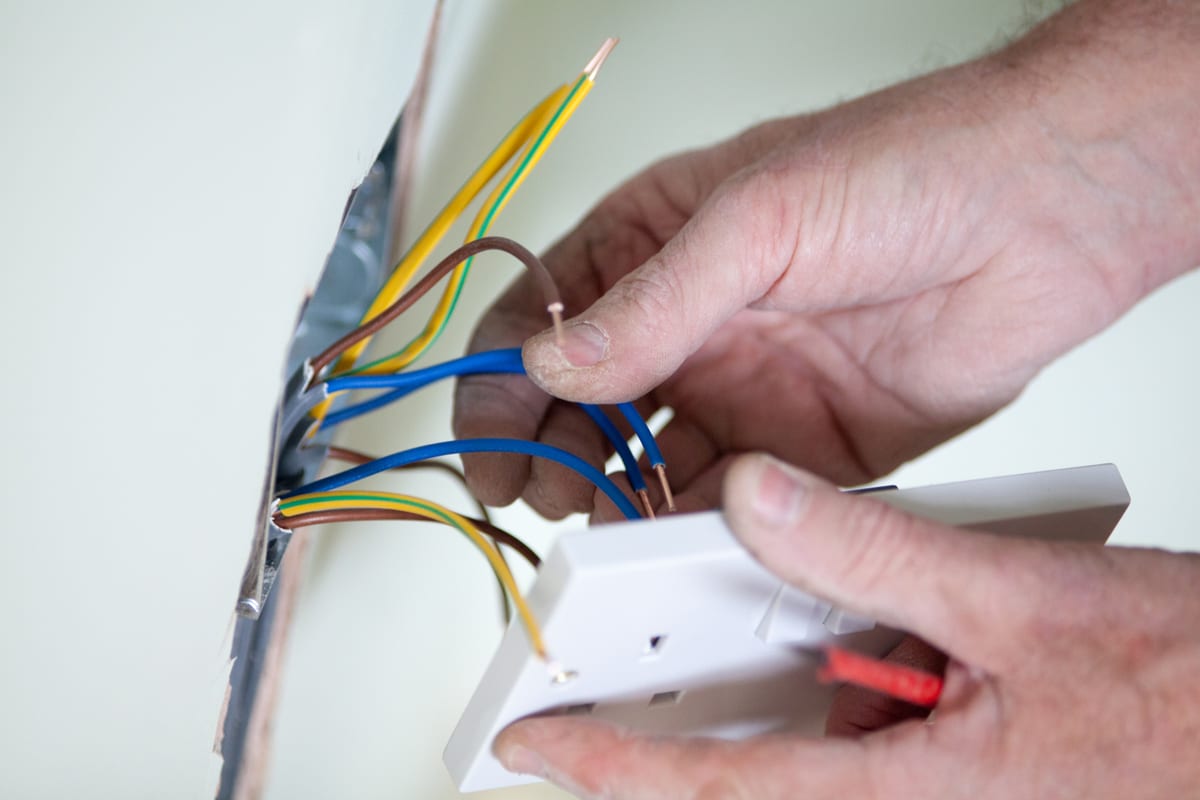
Failed your EICR? Get a remedial works quote — our engineers fix minor faults up to £200+VAT on the day. Failed a commercial EICR? See our commercial EICR guide.
A common question after an Unsatisfactory result is whether a full new EICR is needed once remedial work is complete. It depends on the scope of work.
Minor Electrical Installation Works Certificate (MEIWC) — for smaller targeted repairs (replacing a damaged socket, adding a missing earth, fitting an RCD to an existing consumer unit), the electrician issues a MEIWC confirming the specific work meets the required standard. Sufficient for most C2 remedial scenarios and accepted by local authorities. Typically included free with the remedial work.
Full re-inspection EICR — for substantial work (consumer unit replacement, partial rewire, work affecting multiple circuits), the electrician may re-test the affected circuits and issue an Electrical Installation Certificate (EIC) or new EICR. A full new EICR effectively resets the 5-year clock.
Cost implications: MEIWC typically included free with remedial work; re-inspection EICR on affected circuits £50–£100 on top of remedial costs; a full new EICR would be charged at the standard EICR rate. Always confirm whether re-inspection and certification are included when getting quotes.
Typical remedial costs: missing RCD fit £145; damaged consumer unit replacement £395–£595; dead earth reinstate from £195. All quoted in writing before works start.

Ignoring an Unsatisfactory EICR carries serious legal and financial consequences. The 2020 Regulations give local authorities substantial enforcement powers against non-compliant landlords — and councils actively use them.
Remediation notices — local authorities can serve a formal notice specifying the work required and a deadline (typically 28 days). Notices can be triggered by tenant complaints, routine licensing checks, or the council’s own investigations.
Authority-arranged remedial work — if the landlord fails to comply, the council can arrange remedial work using their own contractors and recover the full cost, typically at a premium over market rates with administrative overheads added.
Financial penalties up to £30,000 per breach — each individual failure (work not complete, report not shared with tenants, no response to council request) counts as a separate breach.
Impact on HMO licensing — for HMO operators, an unresolved Unsatisfactory EICR can result in refusal or revocation of the HMO licence. Operating an unlicensed HMO is a criminal offence with unlimited fines and potential rent repayment orders.
Insurance and liability — most landlord insurance policies require compliance with electrical safety regulations. An unresolved Unsatisfactory EICR can invalidate buildings and liability cover. If a fire or injury occurs due to an electrical fault identified on the report but not remedied, you face personal civil and potentially criminal liability.

Certain issues appear repeatedly on Unsatisfactory reports:
How to reduce the risk of failing: schedule regular electrical maintenance rather than waiting for the EICR; avoid DIY work; upgrade old consumer units proactively; book your EICR before the deadline so you have buffer for remedial work; ensure all areas (loft spaces, cupboards) are accessible on inspection day; address C3 codes from previous reports before they deteriorate into C2.
See what landlords, homeowners and businesses say about working with Easy EPC.


An Unsatisfactory EICR means one or more C1 (Danger Present), C2 (Potentially Dangerous), or FI (Further Investigation) codes were found. Specific parts of the installation require remedial work before the property can be considered safe and compliant. It does not mean the entire installation is faulty or that the property must be vacated — it means targeted issues need addressing within the specified timeframe.
Landlords have 28 days from the date of the report to complete remedial work, unless the inspecting electrician specifies a shorter deadline. C1 codes (Danger Present) require immediate action — the electrician may disconnect the dangerous circuit on the spot. FI codes require prompt further investigation without delay. Once work is complete, you must provide written confirmation to tenants within 28 days.
No. Remedial work must be carried out by a qualified electrician registered with a government-approved competent person scheme who can issue a MEIWC or EIC. DIY electrical work cannot be certified and will not satisfy the 2020 Regulations. Using an unqualified person also creates safety risks and potential liability issues.
Not always. For minor repairs, a MEIWC may be sufficient. For more significant work — consumer unit replacement or partial rewire — re-testing of the affected circuits and a new EICR may be required. Your electrician will advise which is appropriate. See our EICR cost guide for pricing.
The local authority can serve a remediation notice requiring you to complete the work. If you still fail to act, they can arrange their own inspection and remedial work, then charge you the full cost — typically at a premium. Financial penalties up to £30,000 per breach can be imposed, with each individual failure counting as a separate breach. Non-compliance can also affect HMO licensing status and invalidate landlord insurance.
Yes — any registered electrician can remediate. We simply re-inspect and re-issue the EICR once the work is certified.
You must give the tenant and local authority a written timetable explaining the reason for the delay and the new completion date. Fines escalate for wilful delay. Genuine material or scheduling issues are usually accepted if documented.
Yes — until the further investigation is complete. Once the investigation concludes, the FI is upgraded to a proper code (C1, C2, or C3) or removed, and the report re-issued.
Book an EICR in your city — from £99.95+VAT
Get a no-obligation quote for your domestic or commercial EICR. Our team will respond during opening hours.