19+ Years Industry Experience
 Dedicated customer & tech support
 Easy 3 step booking process

 19+ Years Industry Experience
Dedicated customer & tech support
Easy 3 step booking process
19+ Years Industry Experience
Dedicated customer & tech support
Easy 3 step booking process


 Specialising in EICR surveys and related property services.
Over 19 years experience providing property surveys for all building types.
Contact us for free quotes and impartial advice.
Specialising in EICR surveys and related property services.
Over 19 years experience providing property surveys for all building types.
Contact us for free quotes and impartial advice.


| EICR | EPC | |
|---|---|---|
| What it checks | Electrical safety | Energy efficiency |
| Rating system | Satisfactory / Unsatisfactory | A–G scale |
| Legal requirement | Rental properties | Sale or let |
| Validity | 5 years | 10 years |
| Carried out by | Qualified electrician | Accredited energy assessor |
| Typical cost | £100–£300 | £60–£120 |
| Non-compliance penalty | Up to £30,000 | Up to £5,000 |
The penalties reflect different regulatory frameworks: EPC fines are issued by trading standards, while EICR penalties are imposed by local authorities under the 2020 Regulations. The significantly higher EICR penalty reflects the direct safety risk posed by faulty electrical installations.

An EPC (Energy Performance Certificate) rates the energy efficiency of a property on a scale from A (most efficient) to G (least efficient). The assessment covers insulation, heating system, windows, lighting, and hot water — everything that affects how much energy the property uses and how much it costs to run.
EPCs are carried out by an accredited energy assessor and are required by law whenever a property is sold or let. A typical domestic EPC takes 30–60 minutes and is non-invasive. The certificate is valid for 10 years.
Under the Minimum Energy Efficiency Standards (MEES), rental properties in England and Wales must achieve a minimum rating of E before they can be let. Properties rated F or G cannot legally be marketed to tenants without a registered exemption. For full details, see our Energy Performance Certificates page.
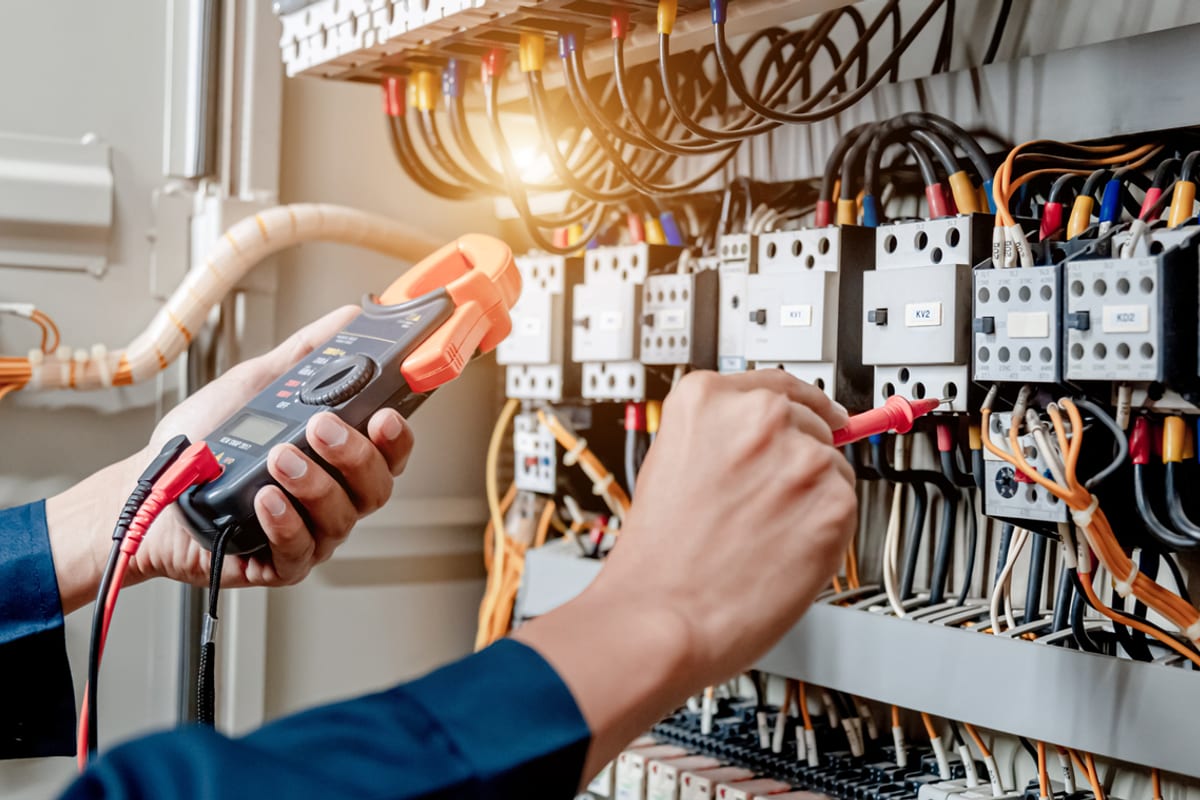
An EICR (Electrical Installation Condition Report) assesses the safety of a property’s fixed electrical installations — the wiring, sockets, switches, consumer unit, earthing, and bonding. Unlike an EPC, which rates efficiency, an EICR determines whether the electrical installation is safe for continued use.
The result is either Satisfactory or Unsatisfactory. If issues are found, they are classified using codes (C1, C2, C3, FI) indicating severity. An EICR is carried out by a qualified electrician with inspection and testing qualifications, typically City & Guilds 2391.
For rental properties in England, an EICR has been a legal requirement since 2020 and must be renewed every 5 years. The inspection is more involved than an EPC — typically 2–4 hours and requiring the power to be temporarily disconnected. See our What Is an EICR? guide.

Landlords in England — both certificates are legally required. Your EPC must be in place before marketing (and meet minimum E rating under MEES). Your EICR must be obtained before new tenants move in and renewed every 5 years. Failing to have either can result in financial penalties and potentially prevent you from legally letting. Provide copies of both to tenants.
Selling a property — an EPC is legally required before marketing for sale. An EICR is NOT legally required for sales, but increasingly recommended. Buyers and conveyancers often request one. Having a valid EICR can speed up sale and avoid last-minute renegotiations if issues are discovered during survey.
Homeowners — neither certificate is legally required for owner-occupiers, but both are recommended. An EPC helps you understand energy costs and identify savings. An EICR (recommended every 10 years) ensures your electrical installation is safe, particularly in older properties where wiring may have deteriorated.
Business owners — an EPC is required if selling or letting commercial property. An EICR is recommended every 3–5 years under BS 7671 guidance and may be required under the Electricity at Work Regulations 1989. Insurers and H&S auditors frequently request evidence of both. See our commercial EICR guide.
Need both? Get quotes for both — Easy EPC covers all landlord compliance certificates from one provider.

Easy EPC has been providing Energy Performance Certificates since 2007 and now offers EICR electrical safety inspections through our nationwide network of qualified electricians. EPCs and EICRs require different accreditations — an EPC is carried out by an accredited energy assessor, an EICR by a qualified electrician — so they are carried out by different professionals, but we coordinate both through a single booking so you only need one point of contact.
Whether you are a landlord preparing a property for a new tenancy, a letting agent managing a portfolio, or a homeowner who wants peace of mind, we coordinate your EPC and EICR to minimise disruption.
We also offer a full range of rental property services including gas safety certificates, PAT testing, legionella risk assessments, and fire risk assessments — each delivered by the appropriate accredited professional.
For pricing, see our EICR cost guide or the EPC page.
See what landlords, homeowners and businesses say about working with Easy EPC.


No — different qualifications are required. An EPC must be carried out by an accredited energy assessor, while an EICR must be carried out by a qualified electrician with inspection and testing qualifications (typically City & Guilds 2391). Easy EPC coordinates both through one booking so you only need a single point of contact.
An EICR typically costs more than an EPC. A domestic EPC usually costs £60–£120, while an EICR ranges from £100 to £300 depending on size and complexity. The higher EICR cost reflects the more time-intensive nature of electrical testing — 2–4 hours vs 30–60 minutes for an EPC.
Not necessarily. If your current EPC (valid 10 years) and EICR (valid 5 years) are still within their validity periods, you can reuse them. You must provide copies of both valid certificates to new tenants before they move in. Check expiry dates before marketing so you are not caught out mid-tenancy.
Yes — every rental needs an EPC (minimum E rating under MEES) and an EICR (Satisfactory) since 2020.
No dependency between them. Book whichever expires first, or coordinate both visits together to minimise tenant disruption.
Book an EICR in your city — from £99.95+VAT
Get a no-obligation quote for your domestic or commercial EICR. Our team will respond during opening hours.