Certified by the following organisations




 19+ Years Industry Experience
 Dedicated customer & tech support
 Easy 3 step booking process
 Over 19 years experience providing property surveys for all property
types.
Specialising in Overheating Calculations (Simplified, TM59 & TM52), SAP Calcs &
EPC and other services for your property.
Contact us for free quotes and impartial advice.
Over 19 years experience providing property surveys for all property
types.
Specialising in Overheating Calculations (Simplified, TM59 & TM52), SAP Calcs &
EPC and other services for your property.
Contact us for free quotes and impartial advice.
Buildings with a relatively small amount of window area in relation to external wall area may be able to demonstrate compliance with this simplified calculation methodology.
If you’re building a new domestic property, or a residential style of commercial property (such as a care home), then you will be required to have a Part O overheating assessment carried out, whether or not it has air conditioning.
Are you looking for TM59 Overheating Calculations for residential properties or TM52 Overheating Calculations for commercial properties?

Simply request your quote using our contact form or by phone. Our customer care team will quickly get in touch during opening hours.

We will arrange an appointment with you, carry out the survey, and once completed send you an invoice.

As soon as we receive payment of the invoice, we will email your Simplified Overheating Assessment Results. We also offer corporate accounts, with survey delivery on completion and monthly billing.
Part O is the part of the Building Regulations that limits overheating in new homes in England. It came into force on 15 June 2022 and covers new houses and flats, care homes, student accommodation and other new residential buildings where people sleep. Hotel rooms are not included.
It asks for two things: limit unwanted heat from the sun in summer, and provide a way to get excess heat out of the building. You show building control you've done both with one of two methods in Approved Document O: the simplified method, or dynamic thermal modelling to CIBSE TM59. Air conditioning is only allowed where openings and ventilation can't remove enough heat on their own.
Use the simplified method if the design has modest glazing for its location and orientation. It's a desk check of window areas, shading and openable areas, so it's quicker and cheaper than modelling. If the glazing is over the simplified method's limits, you need TM59 overheating calculations.
The glazing limits are tighter in the high-risk parts of London and for homes without cross-ventilation (openings on opposite sides of the home). The simplified method also can't be used for a block of flats with communal heating that runs lots of horizontal pipework through the building.
TM59 can give more design freedom for very well insulated and airtight homes, homes heavily shaded by neighbouring buildings, and sites such as central Manchester that the two simplified-method locations don't represent well. Send us the drawings and we'll tell you which route your design needs.
A Part O simplified overheating assessment starts from £149.95+VAT. TM59 overheating modelling for homes starts from £199.95+VAT, and TM52 modelling for commercial buildings from £299.95+VAT.
The price depends on the method, how many homes or house types there are, and how complex the design is. Our prices are competitive and every project is quoted on its own merits. Send us the drawings and we'll come back with a firm figure, and the advice that goes with it.
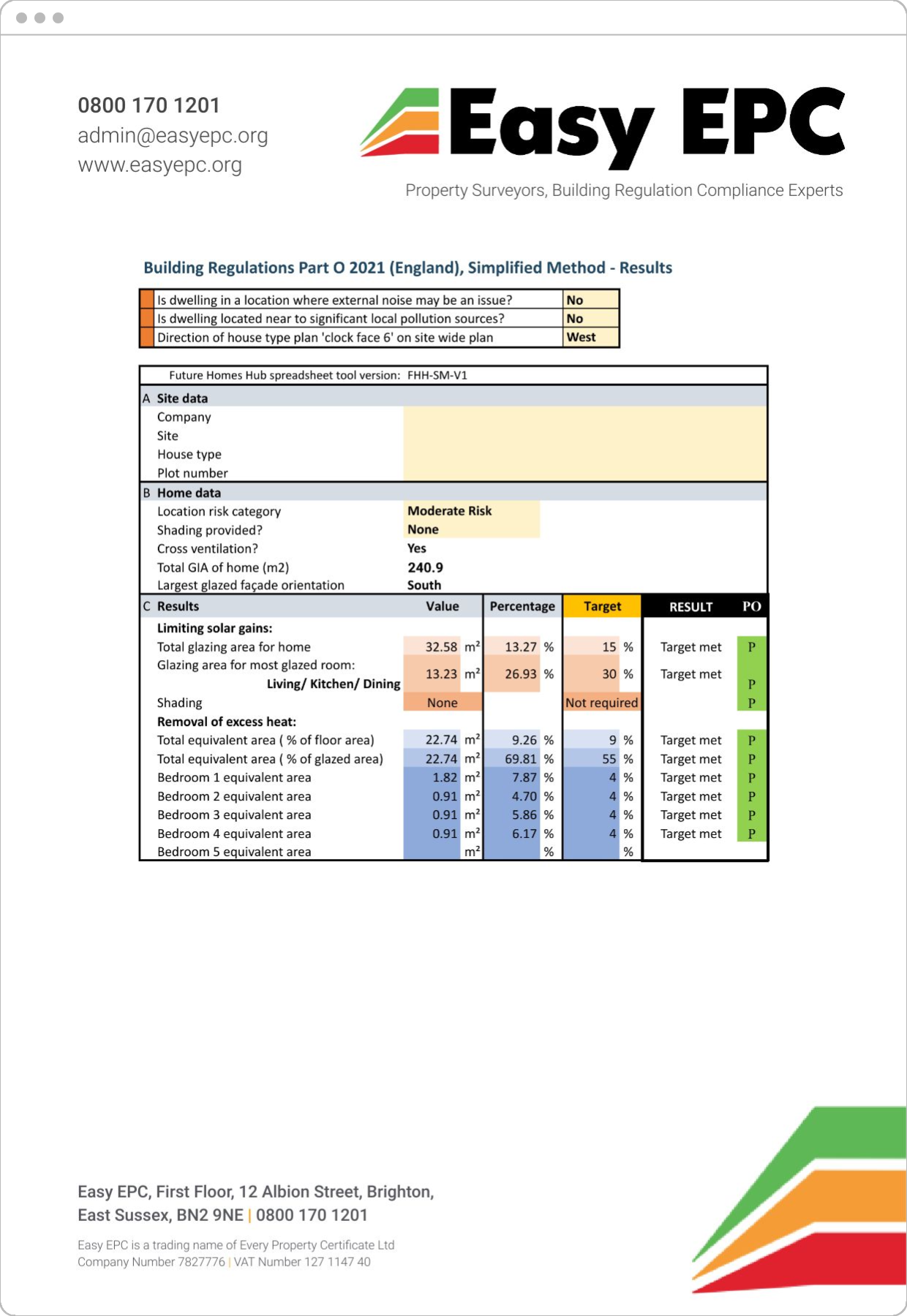
If the property passes with the simplified assessment, then once complete you will receive a clear and easy to understand report, containing all the relevant data tables and the property address, ready to present to your Building Control officer.
If the property fails the assessment, then we will get in touch to let you know, and will provide more information on TM59 Overheating Assessments, which are the next step required now that the property has failed to demonstrate compliance using the Simplified Overheating Assessment.

There are a few different types of overheating calculations, each tailored to different requirements and/or building types.
Simplified Overheating Assessment - Designed to assess the risk of overheating in new build dwellings in the most simple way possible, with no dynamic thermal modelling required. This methodology is suitable for buildings with a relatively small amount of glazing in relation to the amount of external wall area, i.e. buildings that would clearly pass the more detailed TM59 assessment with ease.
TM59 Overheating Assessment - Designed to calculate the risk of overheating in new build dwellings or residential style commercial buildings (such as care homes). If a property fails the Simplified Overheating Assessment then it must move on to having the more detailed TM59 calcs, which involve 3d modelling of the building in an approved Dynamic Simulation Modelling (DSM) software package. If a property has a normal or large amount of glazing in relation to the external wall area, TM59 will be required, as the Simplified Assessment will not be suitable.
TM52 Overheating Calculations - Designed to calculate the risk of overheating in commercial new builds. Suitable for those wanting to gain extra BREEAM credits or when applying for planning permission in a zone with additional framework targets to meet.


The Simplified Overheating Assessment is a desk based exercise, so our assessors will be in contact via email or telephone if they have any queries or need more information.
Overheating assessments are carried out to evaluate the risk of overheating in a building. This version of the assessment is the most simple version, and is appropriate for buildings that have been assessed as being likely to easily meet the requirements of Part O of the UK Building Regulations.
For these buildings, which will have a relatively small area of glazing in relation to the amount of external wall area, a pass on a simplified calculation can save the need to have a more complex and expensive TM59 calculation carried out.
The calculation involves assessing the proportion of glazed areas to floor area in each room, glazing orientation, and ventilation to evaluate whether the building passes or fails.
It does not involve Dynamic Thermal Modelling (DTM), unlike its TM59 counterpart.
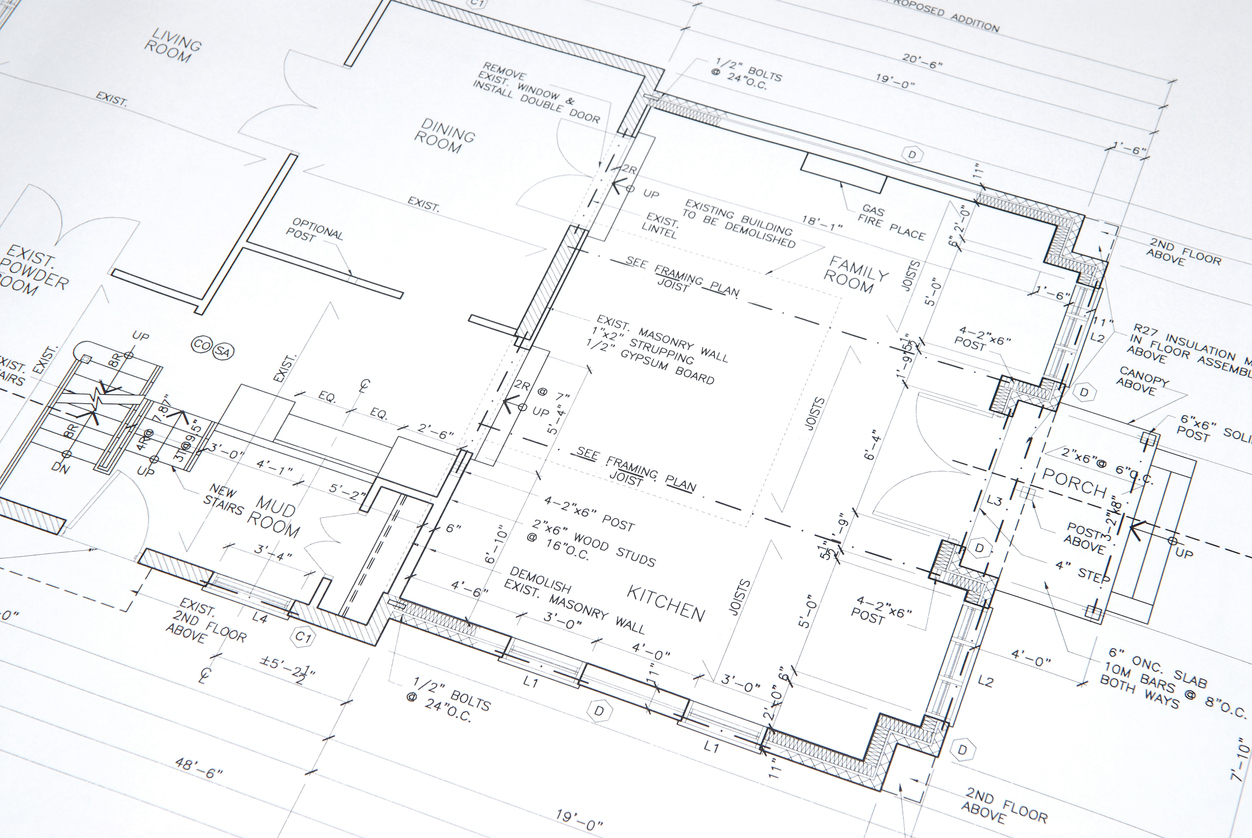
The basic information we need to be able to provide you with a price for the survey is:
To carry out the survey we will need a range of other information, including:
Once we have provided you with a quote, if you wish to go ahead and book we will also need invoicing details and contact details for whoever will be the best person to answer any questions we may have about the build.
Use our online booking tool to quickly get a quote for your Simplified Overheating Assessment.
Our prices start from £149.95 + VAT, depending on size and complexity of the property.

Simplified Overheating Assessments are the easiest and cheapest way of demonstrating compliance with Part O of the UK Building Regulations, a key step towards gaining sign off from Building Control.
Buildings with a relatively small amount of window area in relation to external wall area may be able to demonstrate compliance using this simplified calculation methodology, avoiding the need for a more complex TM59 assessment.
The simplified assessment only considers solar gain and removal of excess heat. This involves evaluating the property’s:
Since the introduction of Part O of the Building Regulations in June 2022, calculating the overheating risk in new dwellings (and residential style commercial buildings, such as care homes) has been mandatory.
New dwellings should only have Simplified Overheating Assessment carried out if they have been assessed as being likely to get a pass with this methodology, as if they fail they will then be required to move on to having the more detailed TM59 Overheating Calculation carried out anyway.
It is not cost effective to carry out a Simplified Overheating Assessment on a dwelling that will obviously not achieve a pass with this type of calculation. Buildings with a relatively large amount of glazing should move straight to having a TM59 calculation produced.
Simplified Overheating Assessment:
TM59:
Overheating calculations are a desk based exercise, using the architectural drawings, specifications, and exact location of the building, and as such no site visit is required.
Part O is a section of UK Building Regulations that came into effect in June 2022. Part O focuses on the risk of overheating when it comes to new residential buildings.
Our prices start from £149.95 + VAT, depending on size and location of the property.
19+ Years Industry Experience
Dedicated customer & tech support
Easy 3 step booking process
Every property certificate, swiftly delivered