Trusted by over 1.8k happy people
Find out why thousands of people love our service




 19+ Years Industry Experience
 Dedicated customer & tech support
 Easy 3 step booking process
EPC reform is confirmed. From 1 October 2030, domestic landlords will need a minimum EPC C rating. See our guides: MEES legislation: current and confirmed changes, landlord MEES guide, and EPC changes explained.
If an exempt property is sold or transferred in any other way the exemption does not transfer to the new owner. This means that if the new owner has planned to continue to let the property, they will have to either improve the property to the required minimum rating or register an exemption.
Below is a guide of each exemption detailing what it is, which property type it can be applied to, how to register, and information about expiration and re-application.

This exemption states that the MEES legislation does not apply if the cost of implementing the cheapest recommendation exceeds £3,500 including VAT.
Domestic properties only.
To register this exemption for their property the landlord must upload supporting documents on the Private Rented Sector (PRS) Exemptions Register.
If there is a recommendation that can be made for less than £3,500 incl. VAT then this exemption cannot be made and the recommendation must be implemented. If, after implementing one or more recommendations totalling a cost under £3,500, the property is still missing the rating required as set out in MEES regulations then the “All Improvements Made” exemption should be registered.
This exemption lasts 5 years. Once expired, the landlord must try to improve the EPC rating again to at least the minimum rating required. If this is still not achievable then a further exemption can be registered.

This exemption can be applied where the "7 year payback" test, which is set out in regulation 28, fails. "Fails" meaning that the expected savings over 7 years from a recommended improvement or package of improvements is less than the cost of installation.
Commercial properties only.
To register this exemption for their property the landlord must upload supporting documents on the Private Rented Sector (PRS) Exemptions Register.
The 7 year payback exemption lasts 5 years. Once expired, the landlord must try to improve the EPC rating again to at least the minimum rating required. If this is still not achievable then a further exemption can be registered
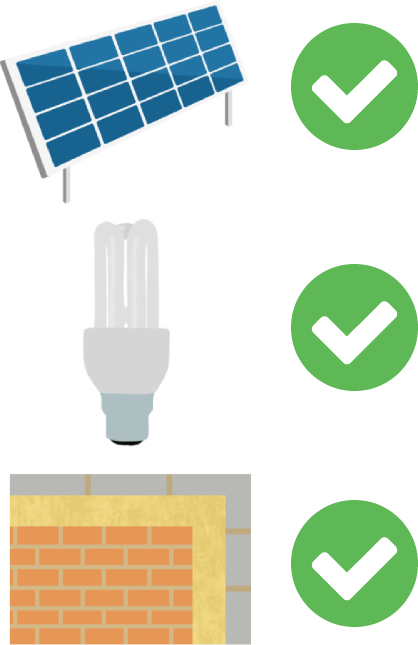
This exemption can be applied where all "relevant" energy efficiency improvements have been made (or where there are none/no more that can be made) and the property remains below an E EPC rating. This includes if the landlord has implemented all improvements up to a total of £3,500 including VAT.
Both domestic and commercial properties.
To register this exemption for their property the landlord must upload supporting documents on the Private Rented Sector (PRS) Exemptions Register.
Required information:
The All Improvements Made exemption lasts 5 years. Once expired, the landlord must try to improve the EPC rating again to at least the minimum rating required. If this is still not achievable then a further exemption can be registered.

This exemption is for properties where implementing the following insulation types are not suitable as they would cause damage to the fabric or structure of the property or building that the property is in:
This exemption is applicable even where these insulation types have been recommended for a property on the EPC or Recommendation Report and meet the funding requirements.
Both domestic and commercial properties.
To register this exemption for their property the landlord must upload supporting documents on the Private Rented Sector (PRS) Exemptions Register.
Required information:
If this advice cannot be obtained from one of the aforementioned experts, then it may be obtained from an independent installer of the cavity/external/internal insulation systems. In this scenario the written advice would still need to be uploaded to the Private Rented Sector (PRS) Exemptions Register.
The Wall Insulation exemption lasts 5 years. Once expired, the landlord must try to improve the EPC rating again to at least the minimum rating required. If this is still not achievable then a further exemption can be registered.
To register this exemption for their property the landlord must upload supporting documents on the Private Rented Sector (PRS) Exemptions Register.
Required information:
The All Improvements Made exemption lasts 5 years. Once expired, the landlord must try to improve the EPC rating again to at least the minimum rating required. If this is still not achievable then a further exemption can be registered

Some energy efficiency improvements can legally require consent from a third party before being implemented. Examples of improvements that may require third party consent are things like external wall insulation and solar panels.
Third parties that may be required to consent include:
Please note that this is not a complete list, landlords will need to check documents like leases, local requirements and mortgage conditions to see if there are third parties who need to consent to implementing any improvements.
Both domestic and commercial properties.
To register this exemption for their property the landlord must upload supporting documents on the Private Rented Sector (PRS) Exemptions Register.
Required information:
If this exemption has been registered based on a tenant not providing consent then it will only last as long as the tenant continues to let the property, once the tenant leaves the landlord must implement the improvement before letting the property again.
This exemption lasts for 5 years, with the exception of when the consent required is from a tenant (explained above in Limitations). Once expired, the landlord must try to improve the EPC rating again to at least the minimum rating required. If this is still not achievable then a further exemption can be registered.

This exemption can be used where an independent RICS surveyor advises that the installation of a recommended improvement will reduce the market value of the property, or the building that the property is part of, by more than 5%.
Both domestic and commercial properties.
To register this exemption for their property the landlord must upload supporting documents on the Private Rented Sector (PRS) Exemptions Register.
Required information:
Unless another exemption applies, if there are other improvements recommended for the property, then the landlord has to implement these before applying for the Devaluation exemption to see if they raise the rating enough.
The Devaluation exemption lasts 5 years. Once expired, the landlord must try to improve the EPC rating again to at least the minimum rating required. If this is still not achievable then a further exemption can be registered.

The new landlord exemption gives you six months from the date you became the landlord to meet the minimum EPC rating or register another exemption. It only covers the following circumstances, stated on the government's website, where someone may have suddenly become a landlord:
If you are unsure whether any of these exemptions apply to you, then the government advises that you source independent legal advice.
Both domestic and commercial properties.
To register this exemption for their property the landlord must upload supporting documents on the Private Rented Sector (PRS) Exemptions Register.
Required information:
The New Landlord exemption lasts 6 months from the date that they became a landlord. Once expired and if the landlord intends to continue letting the property, the landlord must have either improved the property to the required rating, or registered for another exemption if applicable.
On 21 January 2026, the government confirmed through the Warm Homes Plan that domestic private rented properties in England and Wales will need to reach a minimum EPC C rating by 1 October 2030. This is a confirmed policy direction, not yet in force; the new rules will require an Act of Parliament followed by a statutory instrument (SI) amending the Energy Efficiency (Private Rented Property)(England and Wales) Regulations 2015, expected in 2027.
The seven exemptions described above cover the current EPC E minimum, which remains fully in force now. Once the EPC C standard takes effect, it will bring its own cost cap and its own set of exemptions alongside it.
Under the confirmed EPC C standard, the high-cost exemption cap will rise to £10,000 per property (including VAT). Where a landlord cannot reasonably raise a property from below EPC C to EPC C within this higher cap after carrying out all cost-effective improvements, a high-cost exemption will be registrable on the PRS Exemptions Register.
Penalties under the confirmed EPC C standard are expected to rise to up to £30,000 per property, far higher than the current maximum of £5,000, so early preparation is worthwhile.
Key points:
With 2030 approaching, landlords with properties currently below EPC C should plan ahead. A current EPC will show the property's rating and any recommended improvements. For properties that appear unlikely to reach EPC C within the £10,000 cap, professional MEES consultancy can help identify the most cost-effective route or confirm that an exemption is likely to apply.
See our landlord MEES guide and EPC changes explained for a full overview of the confirmed timetable, penalties, and what to do next.
Last reviewed: September 2026
If none of the exemptions above fit your property, the next step is bringing the EPC rating up to the legal minimum. We'll book in a certified assessor and confirm a price by email.
Get my free quoteMEES Exemptions allow landlords to let properties that do not comply with the Minimum Energy Efficiency Standards (MEES) Legislation. MEES regulations mean that landlords cannot let properties without achieving a certain EPC rating first.
You register it on the PRS (Private Rented Sector) Exemptions Register on GOV.UK. Sign in with GOV.UK One Login, enter the property address, choose the exemption and upload the evidence it needs, including a valid EPC for the property. An exemption only counts once it's registered. The evidence for each exemption is listed under “How to Register” above.
Register or manage an exemption on GOV.UK
The new landlord exemption gives you six months from the date you became the landlord to bring the property up to the minimum EPC rating or register another exemption. It only applies in set circumstances, such as buying a property that is already let on an existing tenancy, and you must register it on the PRS Exemptions Register. See the New Landlord section above for the full list.
Yes, there are 7 exemptions which exclude properties from MEES regulations under the current EPC E standard, lasting from 6 months to 5 years.
See above for detailed breakdowns of each exemption.
Yes. When the EPC C minimum takes effect on 1 October 2030, landlords who cannot raise their property to EPC C within the confirmed £10,000 cost cap will be able to register an exemption on the PRS Exemptions Register, expected to last up to around 10 years. The current £3,500 cap and existing exemption rules remain in force until the new legislation comes into effect. See the EPC C 2030 Exemptions section above and our EPC changes explained guide for full details.
For more information about MEES legislation and what it means for you see our resources on MEES.
16+ Years Industry Experience
Dedicated customer & tech support
Easy 3 step booking process
 Specialising in EPC surveys, MEES Consultancy, and other property services.
Over 19 years experience in the property surveying industry.
Contact us for free quotes and impartial advice on property surveys.
Specialising in EPC surveys, MEES Consultancy, and other property services.
Over 19 years experience in the property surveying industry.
Contact us for free quotes and impartial advice on property surveys.