Trusted by over 1.8k happy people
Find out why thousands of people love our service



 19+ Years Industry Experience
 Dedicated customer & tech support
 Easy 3 step booking process
This article explains the different circumstances where a property may be exempt, as well as how long exemptions last and what you need to do if your property is exempt.
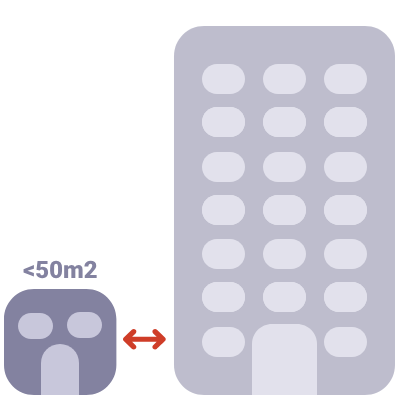
Commercial properties may be exempt from needing an EPC for sale if they are:
The government also stated that there is an exemption for “Low energy demand properties” like agricultural barns, yet have never specified what “low energy demand” is classed as and as such this exemption is not one that can currently be applied.
Listed buildings are required to have an EPC for sale and rental, however due to the limitations of the improvement works that can be carried out on them, they may meet the criteria for a Minimum Energy Efficiency Standards (MEES) exemption. MEES exemptions allow landlords to rent properties that do not meet the current EPC rating required by MEES, however to apply for a MEES exemption the property must have an EPC.

The only properties exempt from requiring an EPC for sale are listed buildings.
Unlike MEES exemptions, you do not have to apply for an EPC exemption. There is no register for EPC exemptions, however when questioned the building owner will have to be able to prove that no EPC is required.
As there is no need to register an EPC exemption there is no expiry for EPC exemptions. However, if regulations change so that a property which was previously exempt needs an EPC, the building owner will have to arrange this in time for whatever deadline is set.
16+ Years Industry Experience
Dedicated customer & tech support
Easy 3 step booking process


 Specialising in EPC surveys and other property services.
Over 19 years experience in the property surveying industry.
Contact us for free quotes and impartial advice on property surveys.